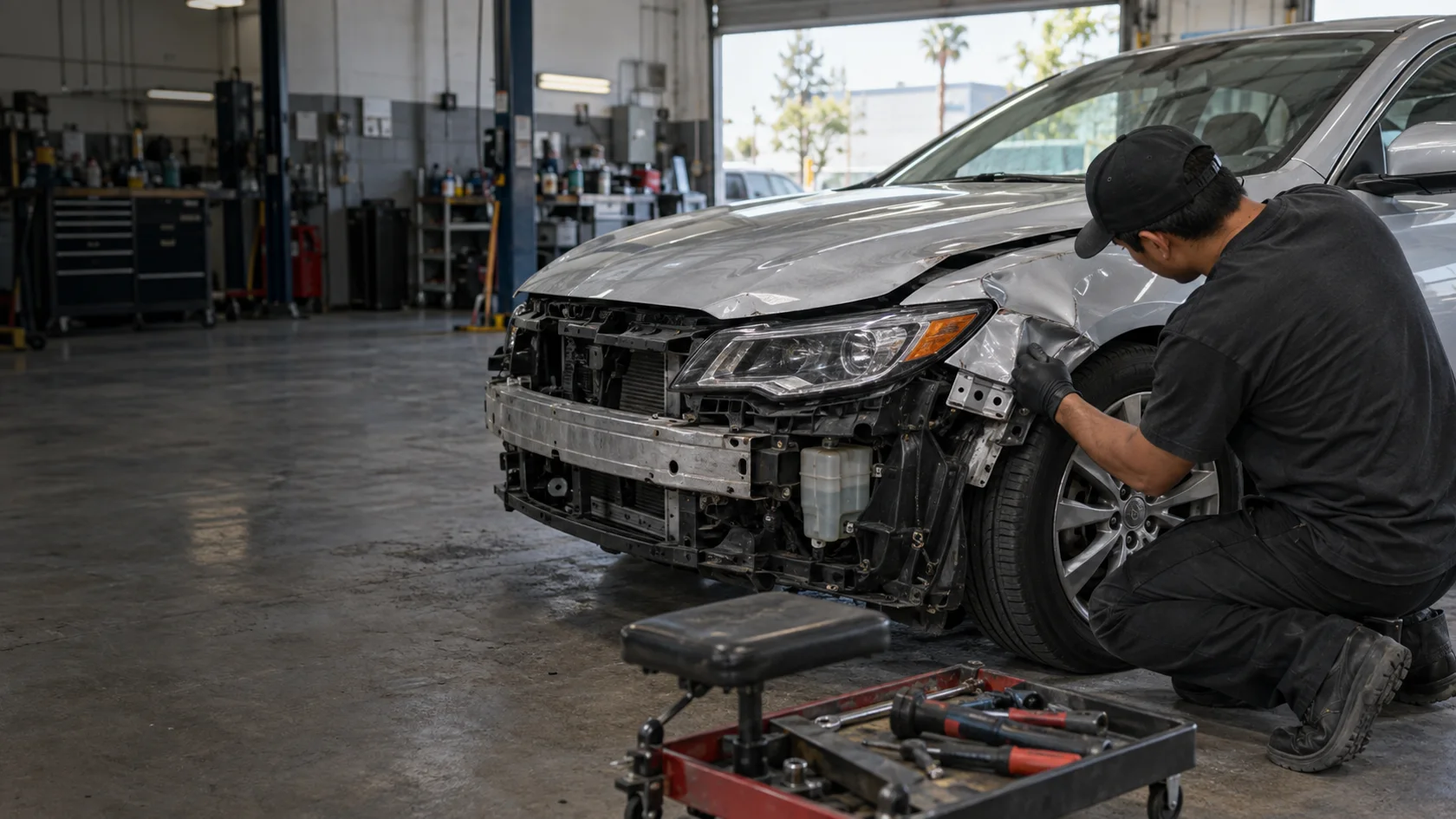
Collision repair in Garden Grove, CA
Collision Repair That Goes Beyond the Visible Damage.
A bent bumper is rarely the whole story. We inspect the affected panels, attachment points, structure, and nearby systems, then build a repair plan around what your vehicle actually needs.
Contact UsTell us what happened, share photos if you have them, and we will help you determine the right next step.
- Damage assessment
- Repair planning
- Insurance coordination
- Final quality checks
Start with the complete picture
A correct repair starts with the damage you cannot see.
After an impact, the obvious dent or torn bumper cover gets your attention. In the shop, we also look behind it. Plastic retainers can break, reinforcement bars can shift, mounting points can move, and nearby cooling or electrical components can be affected without leaving a dramatic mark on the outside.
The first estimate is a starting point. Once damaged parts are removed, we compare what we find with the original impact area and update the repair plan when needed. That is how hidden damage is documented instead of painted over or left for you to discover later.
Repairs built around the impact
Collision repair is more than replacing the damaged panel.
The right scope depends on where the vehicle was hit, how the force traveled, the materials involved, and what sits behind the visible surface.
- Bumper and impact-area repair: Cover damage, broken mounts, reinforcement components, and surrounding fitment are evaluated together.
- Fender, door, and quarter-panel repair: We assess panel shape, edges, gaps, access, and whether repair or replacement makes sense.
- Panel replacement and fit: Replacement parts must align with adjacent panels, lamps, trim, seals, and attachment points.
- Structural and unibody correction: When measurements show movement, the repair plan must address geometry before cosmetic work is finished.
- Paint preparation and refinishing: Substrate preparation, color evaluation, application, and blending all affect the final result.
- Reassembly and function checks: Parts are refitted and affected functions are reviewed against the completed repair scope.
How the work moves forward
A repair process you can follow.
You should know what is happening to your car and why. We keep the process practical, from the first look through the final review.
-
Inspect and document
We review the impact area, vehicle condition, visible damage, warning indicators, and information you provide about the accident.
-
Disassemble and confirm
When the repair requires it, affected parts are removed so hidden damage can be identified and added to the plan before work continues.
-
Repair or replace
Each damaged component is evaluated for safe repairability, correct fit, and the needs of the vehicle. Applicable manufacturer procedures guide repair decisions.
-
Refinish and reassemble
Repaired areas are prepared and refinished, then trim, lamps, hardware, and related components are installed and aligned.
-
Review the completed work
We check panel fit, appearance, operation of affected items, and the details included in the repair plan before delivery.
Help with the claim
Your insurer's first estimate may not be the final repair plan.
Insurance estimates are often prepared before damaged parts are removed. If disassembly reveals additional accident-related damage, we document what was found and provide the repair information needed for review. This additional request is commonly called a supplement.
We can communicate with your insurance company about the repair scope while keeping you informed. Approval timing, parts availability, and newly discovered damage can affect the schedule, so we give you the clearest update available instead of promising a date before the facts are known.
What quality looks like
We do not judge a collision repair by paint shine alone.
A finished repair should look right, fit right, and account for the components affected by the impact.
- Panel fit: Gaps, edges, latches, lamps, and trim should sit consistently.
- Surface and finish: The repaired area should be properly shaped, prepared, and checked under useful lighting.
- Related functions: Items disturbed by the collision or repair should be reviewed within the confirmed scope.
- Clear handoff: You should understand what was repaired and any follow-up information that applies to your vehicle.
Collision repair questions
Answers before you bring the car in.
How much does collision repair cost?
Cost depends on the damaged panels, hidden damage, required parts, labor, paint work, and any structural or system-related procedures. An inspection gives us the information needed to prepare a useful estimate.
Can a minor accident cause hidden damage?
Yes. A bumper cover can spring back while retainers, absorbers, reinforcements, brackets, or nearby components remain damaged underneath. Disassembly is sometimes the only way to see the complete repair scope.
Is my car safe to drive after a collision?
Do not drive if you notice fluid leaks, tire or wheel contact, loose body parts, broken lights, steering changes, overheating, or safety warnings. When in doubt, arrange a tow and have the vehicle inspected.
How long does collision repair take?
The timeline depends on damage severity, parts availability, insurance approval, and what is found after disassembly. We can give you a more realistic schedule once the repair plan is confirmed.
Can you work with my insurance company?
Yes. We can document the damage, communicate repair information, and submit supplements when additional accident damage is found during the repair process.
Will the repaired paint match the rest of my car?
A proper match depends on accurate color evaluation, surface preparation, application, and blending when the repair calls for it. We check the finish and adjacent panels before the vehicle is delivered.
Does every damaged part need to be replaced?
No. Repairability depends on the part, material, damage location, access, and safe repair limits. We determine whether repair or replacement is the sound choice for each affected component.
Start with a clear look at the damage
Let us help you make the next repair decision.
Contact our Garden Grove shop with the vehicle details and what happened. We will explain what we can see, what may require disassembly, and the practical next step.