Collision towing help in Garden Grove
Get the Car Out of Harm's Way. Get the Repair Started Right.
When a damaged vehicle should not be driven, the first repair decision is how to move it without adding risk or damage. We help coordinate towing to our shop and make sure the repair handoff begins with the right information.
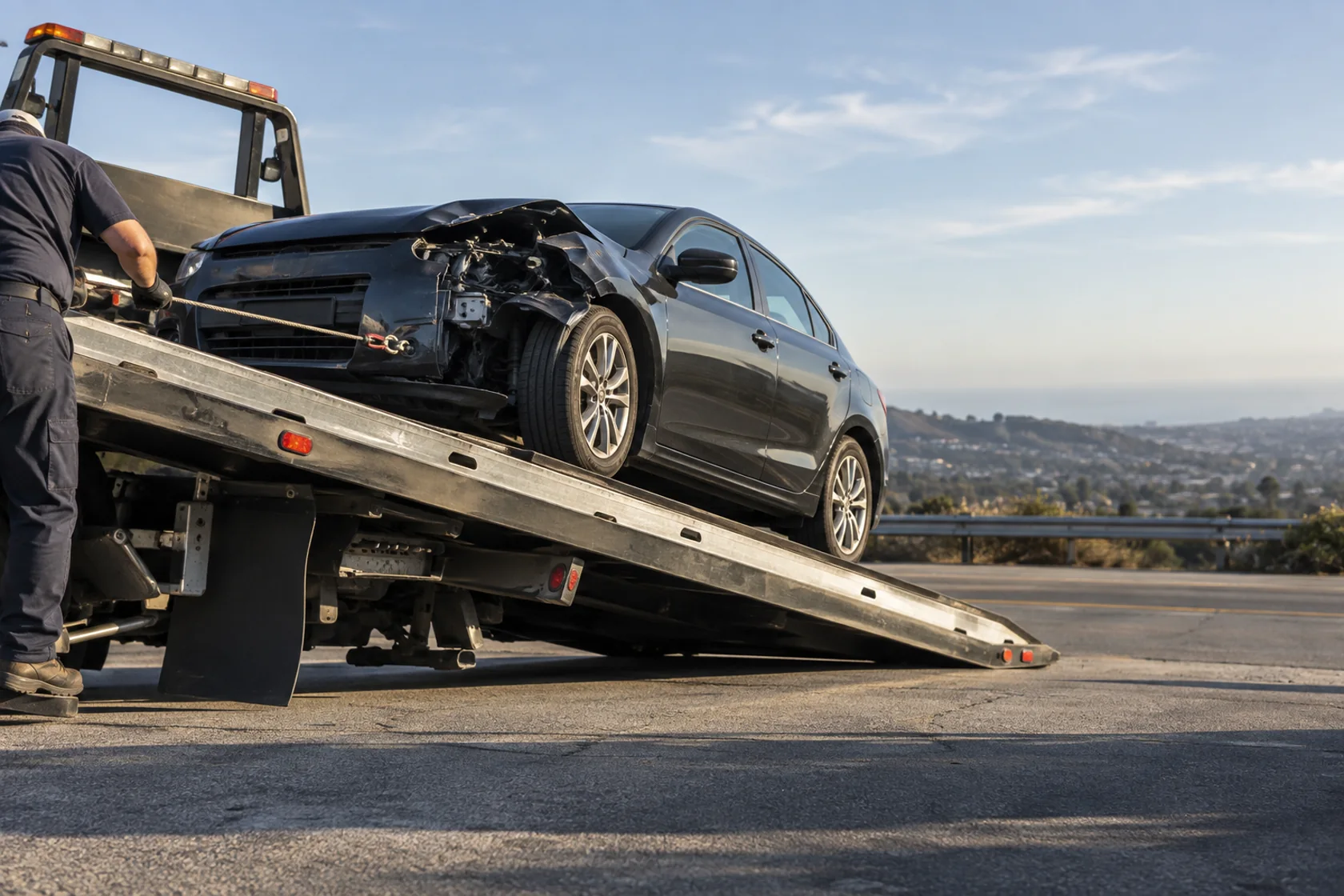
Before the truck is dispatched
Describe the condition, not just the collision.
The right truck and loading equipment depend on what the vehicle can still do. A tow provider needs practical details that a claim number or accident photo may not show.
- Location and access
- Give the exact address or landmark, vehicle position, clearance limits, parking structure height, gate instructions, and any roadside restrictions.
- Rolling condition
- Say whether the vehicle rolls, steers, shifts into neutral, releases the parking brake, and has intact tires and wheels.
- Damage and hazards
- Report loose panels, broken suspension, locked wheels, low ground clearance, deployed airbags, leaking fluids, or parts contacting the road.
- Keys and destination
- Confirm key access, the registered owner's availability when required, our shop name and address, and the contact person receiving the vehicle.
Drive or tow
If you are unsure whether it is roadworthy, do not test it in traffic.
A car can start and move after an impact while a tire, suspension part, cooling component, light, or body panel is no longer safe. When any critical condition is uncertain, towing protects the vehicle and other road users.
Wheel, tire, or suspension damage
A bent wheel, cut sidewall, shifted tire, rubbing, leaning corner, or broken suspension component can fail under load or cause loss of control. Do not rely on a short parking-lot movement as proof that the car is safe to drive.
Fluid, temperature, or warning concerns
Leaks, steam, overheating, oil-pressure warnings, charging-system messages, or a damaged radiator area can turn collision damage into major mechanical damage if the engine continues running.
Steering, braking, or visibility changes
A changed steering position, pulling, brake-pedal problem, broken windshield, missing mirror, inoperative lamp, or obstructed view is enough reason to stop and arrange transport.
Loose panels or deployed restraints
A hood, bumper, liner, underbody shield, or lamp assembly can detach or contact moving parts. Deployed airbags and damaged seat belts also require the vehicle to remain out of service until properly assessed.
The repair-shop handoff
Where the vehicle goes matters as much as how it gets there.
Before a vehicle leaves the scene, impound lot, home, or another facility, confirm the destination. An unnecessary storage stop can add fees, paperwork, and another tow. When possible, contact us first so we can confirm arrival details and explain what information should travel with the vehicle.
On arrival, we record the vehicle's condition and available documentation. The visible impact is only the starting point. A complete collision repair plan may depend on cleaning the damaged area, gaining safe access, checking the vehicle identity and options, disassembling affected parts, and communicating with the insurer when a claim is involved.
See how our services connectCollision towing FAQ
Answers for moving a damaged vehicle safely.
Equipment, timing, and charges depend on the provider and the recovery conditions. These answers help you prepare for a typical tow to the shop.
Can you help tow my damaged car to your body shop?
Yes. Contact us with the vehicle location, condition, and claim details if available. We can help coordinate transport to the shop, subject to tow-provider availability, access, and pricing.
Should I drive my car after a collision or have it towed?
Have it towed if steering, braking, tires, wheels, lights, fluids, airbags, glass, body panels, or warning messages raise a safety concern. A vehicle can move and still be unsafe or cause additional damage.
Do I need a flatbed tow truck after an accident?
A flatbed is often appropriate for collision-damaged, low-clearance, all-wheel-drive, electric, or non-rolling vehicles. The tow operator should choose the equipment and loading method for the vehicle and its damage.
Will insurance pay for collision towing?
It may, depending on the policy, accepted liability, towing coverage, and claim authorization. The insurer decides reimbursement and limits, so keep the tow invoice and confirm where the vehicle is authorized to go.
What information does the tow truck driver need?
Provide the exact location, vehicle year and model, visible damage, whether it rolls or steers, fluid leaks, wheel condition, key access, parking restrictions, and the destination contact details.
Can a tow truck move a car with locked wheels or broken suspension?
Often, but it may require dollies, skates, a flatbed, or other recovery equipment. Describe the condition before dispatch so the provider can send equipment suited to the job.
What happens when my towed car arrives at the shop?
We document the arrival condition, confirm available keys and claim information, and plan the inspection. A complete estimate may require cleaning, safe access, disassembly, or insurer review.
Start with the vehicle's exact condition
Tell us where the vehicle is, what is damaged, and whether it can roll.
Contact Viet Auto Collision in Garden Grove so we can help coordinate a practical tow destination and prepare for the repair handoff.