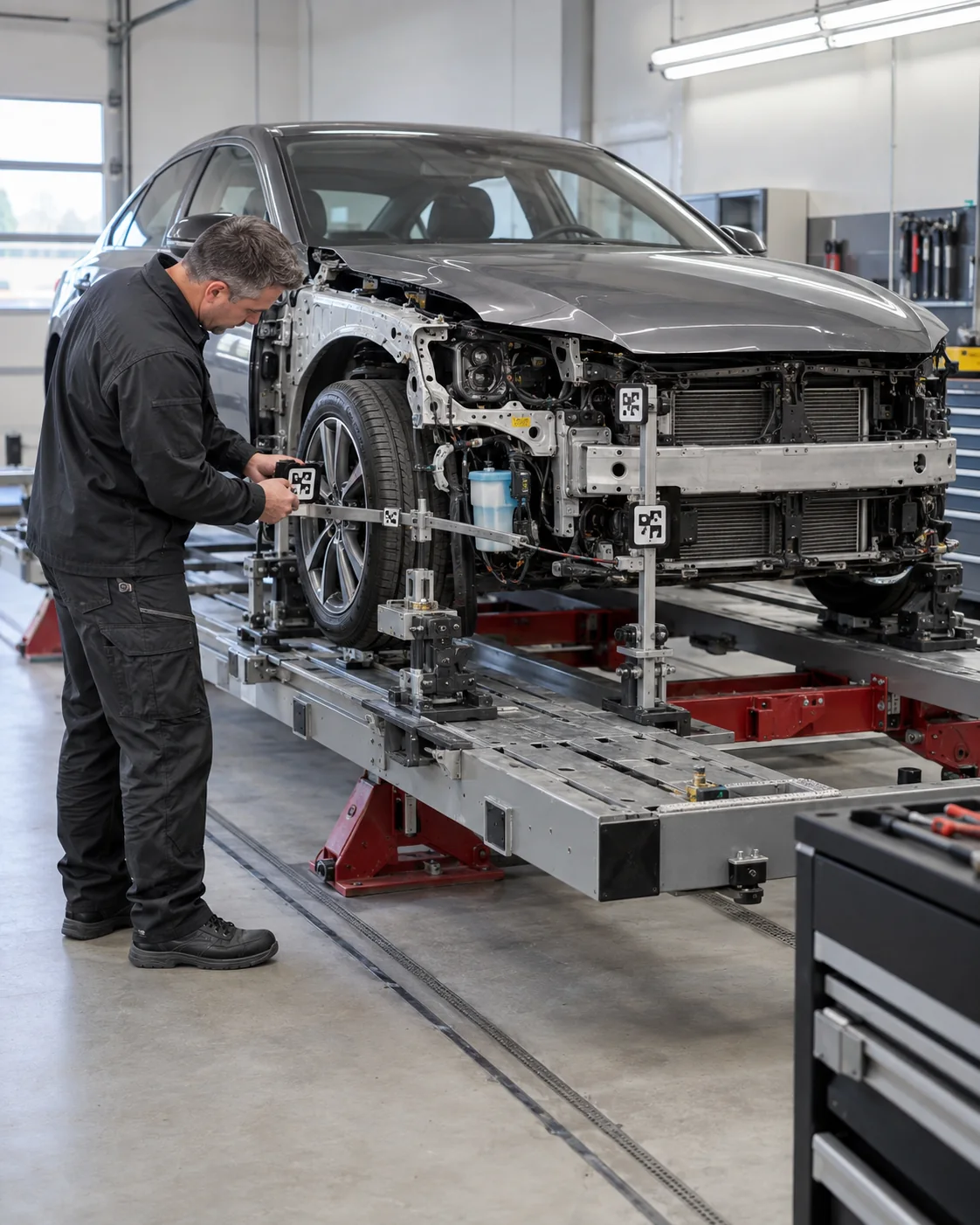
Structural repair in Garden Grove
Frame Straightening Starts With Measurements, Not Guesswork.
Collision force can move structural points while the outer damage looks surprisingly contained. We identify what shifted, plan the direction of correction, and verify the structure before the repair moves forward.
Damage beneath the bodywork
When mounting points move, panel gaps are only the symptom.
Modern vehicle structure manages load through connected rails, reinforcements, pillars, floors, and mounting points. A hit at one corner can transfer force beyond the obvious dent. That is why a bumper cover or fender can never tell the whole story by itself.
Our assessment follows the damage path. We look for buckling, displaced seams, changed openings, suspension mounting concerns, and dimensions that no longer agree from side to side. Disassembly may be necessary before a responsible structural plan can be made.
- Front structure
- Rails, aprons, radiator-support areas, and suspension-related points can move together.
- Side structure
- Rocker, hinge-pillar, center-pillar, and door-opening geometry affect fit and load paths.
- Rear structure
- Rear rails, floor sections, quarter structure, and deck openings require connected checks.
- Mounting points
- Suspension, cradle, and powertrain locations matter because alignment starts with sound geometry.
The structural repair sequence
Measure. Correct. Measure again.
Pulling metal without a dimensional baseline is movement, not controlled repair. Each correction needs a target and a way to confirm it.
- Baseline
- Map the structureReference points are compared to the vehicle's intended geometry so the direction and amount of movement can be understood.
- Controlled correction
- Reverse the damage pathThe vehicle is anchored and force is applied in planned stages while the metal, seams, and connected areas are monitored.
- Confirmation
- Verify before finishingDimensions, openings, mounting locations, and related fit are checked again before cosmetic work conceals the repaired structure.
Frame and unibody vehicles
Different construction calls for a different repair strategy.
The term frame damage is often used broadly. The actual repair depends on how the vehicle carries load and which structural areas were affected.
- Unibody structure
- The body and structural foundation work as one assembly. Corrections must account for connected sections, crush zones, attachment points, and material-specific repair limits.
- Body-on-frame structure
- The body mounts to a separate frame, but impact can still affect frame sections, brackets, suspension locations, and how the body sits above them.
- Repair or replacement
- Not every structural part should be straightened. Damage location, deformation, material behavior, access, and the applicable repair procedure guide that decision.
Signs worth checking
A vehicle can look repaired and still tell you the geometry is wrong.
These symptoms do not prove structural damage on their own, but they are reasons to stop guessing and have the collision path inspected.
- The steering wheel sits off center or the vehicle pulls after the impact
- A door, hood, or trunk opening suddenly fits or closes differently
- Panel gaps change noticeably from one side to the other
- A tire rubs, sits differently in the opening, or develops unusual wear
- Visible ripples, torn seams, or buckling appear near structural areas
Structure before appearance
Good panel fit depends on getting the foundation right first.
Structural position affects far more than appearance. It influences openings, suspension relationships, component fit, and how later repair operations come together. Correcting and confirming that foundation gives body, paint, and mechanical work a reliable place to start.
Frame straightening questions
What drivers ask after structural damage is suspected.
Clear answers begin with knowing what measurements and disassembly reveal on your vehicle.
How can I tell if my car frame is bent after an accident?
Uneven panel gaps, changed door operation, an off-center steering wheel, tire contact, or a vehicle that no longer tracks correctly can point to structural movement. Measurements are needed to confirm the cause.
Can a unibody vehicle be straightened?
Often, yes. A unibody can be corrected when the damaged structure remains repairable and the required repair procedure supports correction. The repair plan depends on where and how the load path moved.
Does frame damage automatically mean a car is totaled?
No. A total-loss decision considers repairability, vehicle value, repair cost, and insurer requirements. Structural damage by itself does not answer that question.
Is it safe to drive a car with possible frame damage?
Driving is not recommended when the vehicle pulls, a tire rubs, a door will not latch correctly, warning lights are on, or structural damage is visible. Have the vehicle assessed before assuming it is roadworthy.
How does frame straightening work?
The vehicle is secured, measured against its reference dimensions, and corrected with controlled force at planned points. Measurements are checked during and after correction to verify the result.
Will a wheel alignment fix frame damage?
No. Alignment adjusts wheel angles within their available range. It does not move structural mounting points back into position, so structural issues must be addressed first.
How long does frame straightening take?
Timing depends on damage severity, disassembly, measurement findings, parts, repair procedures, and related mechanical or body work. A useful timeline comes after the structure has been exposed and assessed.
Start with an informed inspection
If the vehicle no longer feels or fits the same, let us look beneath the surface.
Contact our Garden Grove shop to discuss the collision and the symptoms you have noticed.