Collision repair workmanship warranty
A Warranty Should Explain the Repair, Not Hide Behind Fine Print.
Confidence after collision repair comes from knowing what workmanship is covered, what falls under a separate part or material warranty, and how to raise a concern if something does not look or perform as expected.
Ask About Your Repair- What work is covered?
- The written warranty should connect coverage to the operations performed by the shop.
- How long does it apply?
- The stated term controls. We do not substitute a generic duration for the document issued with a repair.
- What happens if there is a concern?
- Prompt inspection helps separate a workmanship issue from new damage, wear, part failure, or an unrelated condition.
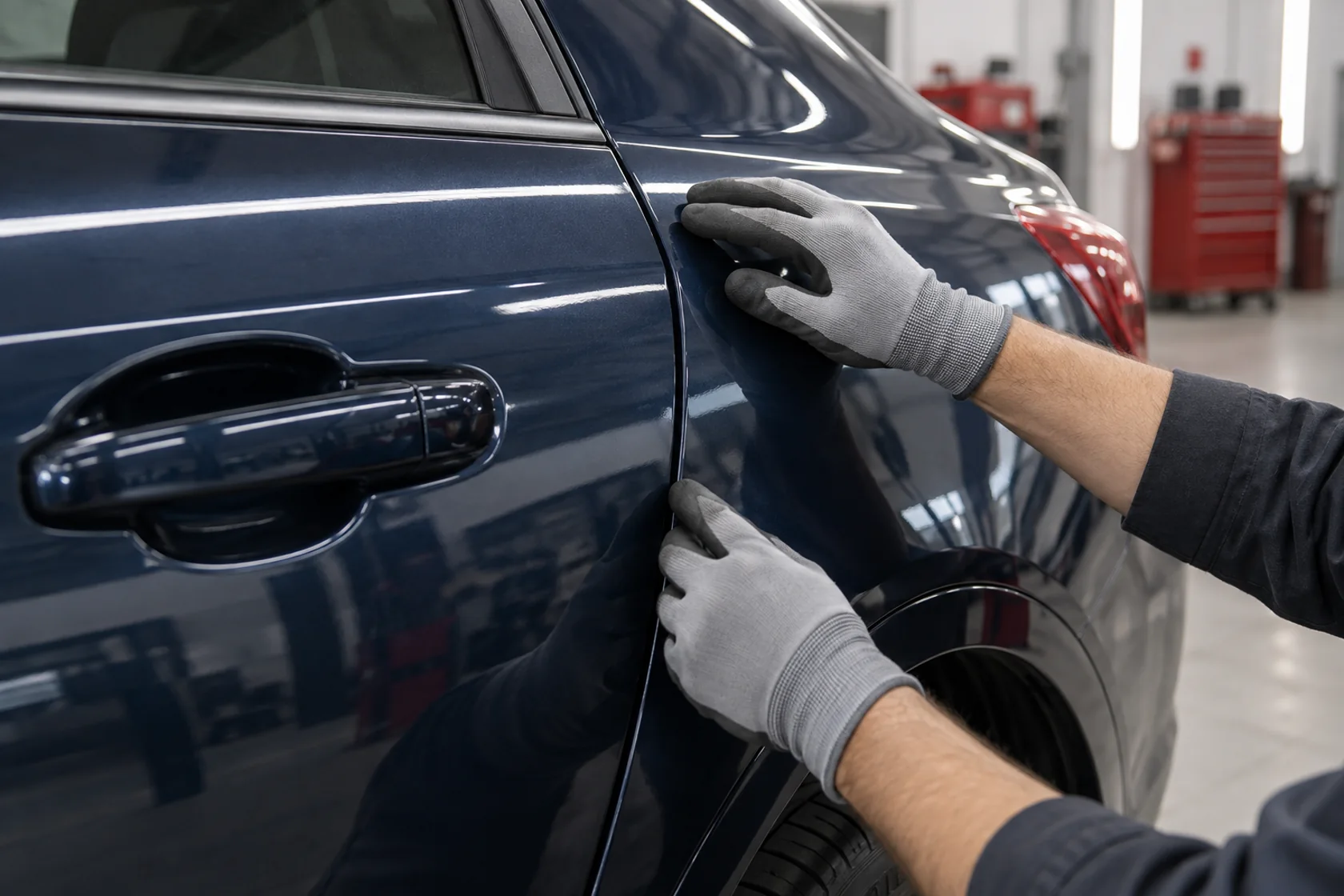
Quality control before delivery
The strongest warranty conversation starts before you need it.
At delivery, review the repaired area in useful light and ask questions while the repair information is close at hand. Look at panel fit, finish appearance, trim position, warning indicators, and the operation of items involved in the repair. Some coatings and materials also come with care instructions that matter after pickup.
Keep the final invoice, repair order, parts information, care guidance, and written warranty together. Those documents show what work was authorized and which terms apply if a concern develops later.
Coverage needs a boundary
Workmanship, parts, materials, and new damage are different questions.
A fair review starts by identifying the source of the condition. Similar symptoms can have different causes, and each cause may fall under a different document or responsibility.
Conditions that may involve repair workmanship
Subject to the written terms and an inspection, a concern may relate to how a covered repair operation was performed.
- Panel alignment or attachment associated with the repaired area
- Finish defects attributable to the refinishing work
- Trim, seal, fastener, or component installation within the repair scope
- Corrosion protection or seam treatment applied as part of covered work
- Correction previously performed by the shop that no longer holds as intended
Conditions commonly reviewed separately
These examples do not decide a claim. They show why the cause must be inspected before warranty coverage can be determined.
- A later collision, parking impact, chip, scratch, vandalism, or road debris
- Normal wear, neglected maintenance, misuse, or environmental exposure
- Failure of a part covered by its manufacturer or supplier
- Pre-existing damage, corrosion, or prior repairs outside the authorized scope
- Work changed, refinished, disassembled, or repaired by another party
The written warranty controls. This page explains common industry concepts. It does not create, extend, or replace the specific warranty issued with a completed repair.
When something needs a second look
Report the condition early and preserve what we need to inspect.
Do not wait for a small concern to spread or ask another shop to alter the area before the original work can be evaluated. If the vehicle may be unsafe, stop driving and tell us that first.
- Describe
- Tell us what you noticed, when it began, whether it changes with weather or driving, and whether any later event affected the area.
- Document
- Share clear photos when useful and bring the repair order, final invoice, warranty, and relevant part or insurer information.
- Inspect
- We compare the concern with the repaired scope and look for evidence of workmanship, part failure, outside damage, wear, or another cause.
- Resolve
- If the condition is covered, the written terms guide the corrective work. If it is not, we explain the finding and available repair options before new work is authorized.
Protect the repair record
Good documentation makes a later concern easier to understand.
Collision repairs can involve body labor, refinishing materials, replacement parts, sublet operations, insurer approvals, and manufacturer or supplier coverage. Keeping the documents together helps identify which party and which terms apply without relying on memory months or years later.
Follow the care guidance provided at delivery, especially for fresh paint, washing, waxing, protective films, and any component with a separate maintenance requirement. If another incident affects the repaired area, record it promptly so new damage is not confused with the earlier repair.
Explore all collision services- Repair order and final invoiceThe authorized operations and final charges establish the completed scope.
- Written warrantyThe actual coverage, duration, exclusions, customer duties, and remedy belong here.
- Parts informationSupplier or manufacturer coverage may apply separately from shop workmanship.
- Photos and communicationsDated records help show when a condition appeared and how it changed.
Workmanship warranty FAQ
Clear answers without making promises the document does not make.
Every repair and written warranty can differ. Use these answers to know what to ask, then refer to the terms issued with your vehicle.
What does an auto body workmanship warranty cover?
It generally addresses defects caused by the repair work performed by the shop, subject to the written warranty terms. The repair order and warranty document identify the covered work, duration, conditions, and remedies.
How long does a collision repair warranty last?
Warranty periods vary by shop, repair operation, part, and material. Review the written warranty supplied with your repair because no general website description can replace its specific duration and terms.
Are replacement parts covered by the body shop warranty?
Parts may carry separate manufacturer, supplier, or salvage-source warranties. The shop's workmanship coverage and the part warranty are not necessarily the same, so ask how each component is handled.
Is collision repair paint covered by a workmanship warranty?
Refinishing workmanship may be covered under the written terms. Damage from later impacts, chips, scratches, chemicals, neglect, corrosion, environmental exposure, or unrelated prior conditions is commonly treated separately.
What should I do if I notice a problem after repair?
Contact the shop promptly, describe when the concern appeared, and avoid altering the repaired area before inspection. Bring the repair order, warranty document, and any photos that show how the condition developed.
Can another shop fix the problem before a warranty inspection?
Get guidance from the original repair shop first unless immediate action is required for safety or to prevent further damage. Outside work can change the condition and may affect the available warranty remedy.
Is an auto body warranty transferable to a new owner?
Transferability depends on the written warranty. Some coverage applies only to the customer named on the repair order, while other terms may differ. Check the document before selling the vehicle.
Start with the repair record
If something concerns you after delivery, let us inspect it before assumptions take over.
Contact Viet Auto Collision in Garden Grove with the repair order, a description of the condition, and any photos that help show what changed.