OEM Collision Parts in Garden Grove, Checked Before They Go On
Viet Auto Collision offers OEM parts as an option for collision repairs in Garden Grove. We explain which part type your estimate lists, check availability and coverage, and test the fit before paint, starting with a free estimate.
Get a Free Estimate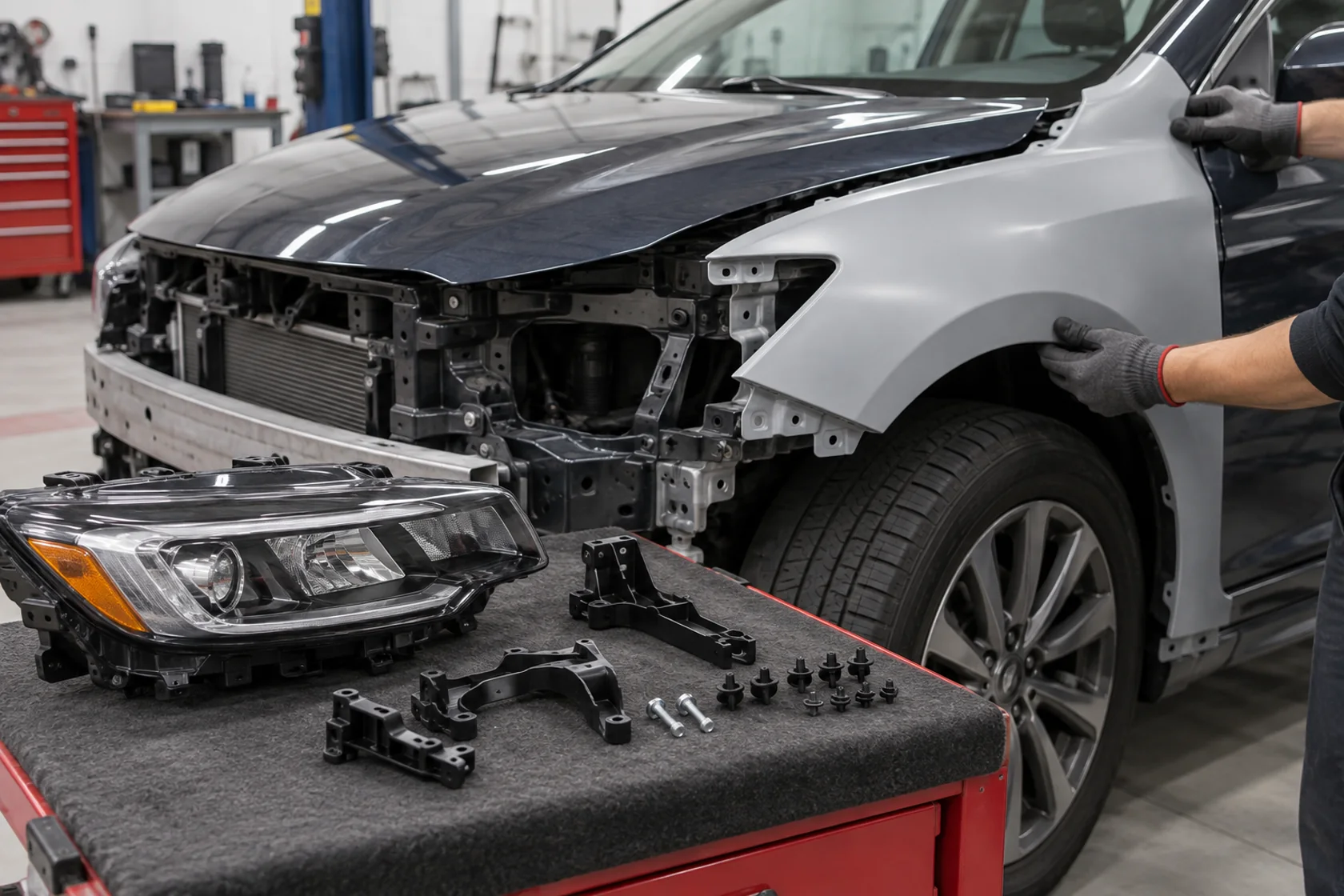
What OEM parts are, and why they matter in a body repair
OEM parts are new parts supplied through the vehicle manufacturer's parts channel for your specific vehicle. Depending on the part, that can matter for the material, how it attaches, corrosion protection, shape, sensor mounts, lamp performance, trim fit and the hardware that comes with it.
The OEM label alone does not make a good repair. Parts can be superseded, damaged in shipping, incomplete or made for a different version of your model, so we check what arrives against the repair plan. Qualifying repairs carry our lifetime workmanship warranty on the labor, and OEM parts are typically covered by the manufacturer's parts warranty.
Why part fit affects the whole side of the car
A fender never fits on its own. Its position affects the hood, headlight, bumper, door, liner and brackets, and the body line along the side of the car. That is why part fit matters in every collision repair.
- Mounting geometry
- Holes, tabs, flanges, studs, brackets, and locating points must agree with the vehicle and adjacent components without forcing the assembly into place.
- Feature content
- Trim level, lighting, cameras, sensors, moldings, wheel-opening details, sound material, and production changes can create multiple versions of a part that looks similar in a catalog.
- Material and finish
- Steel, aluminum, plastic, coatings, seam locations, and factory-applied corrosion protection influence preparation and how the part is joined or refinished.
- Connected repair work
- Replacement can require transfers, one-time-use fasteners, adhesives, weld preparation, corrosion protection, aiming, calibration, or additional operations defined by the vehicle and component.
OEM, aftermarket or recycled: what your estimate lists
Collision estimates can list new OEM, aftermarket, recycled, reconditioned, remanufactured or repaired parts, and these terms do not mean the same thing. The right choice depends on the damaged part, whether it can be repaired, your vehicle, availability, what your insurer authorizes and your own preference.
We explain each part listed, how it fits into the repair and whether a change affects cost or timing. If your insurer will not pay the full amount for a part you request, we show you the difference before work starts. Our insurance claims assistance can help with that conversation.
Browse all auto body services- Vehicle identification. Year, model, build details, trim, options, and production changes help narrow the correct application.
- Repair procedure. Vehicle information can define whether a component is repairable, replaceable, transferable, or subject to a specific joining method.
- Part condition. New, used, repaired, or reconditioned components need different inspection questions before they enter the repair.
- Availability and timing. A backorder can affect the repair sequence and delivery date, while a rushed substitution can introduce fit or scope problems.
- Claim authorization. Policy language and insurer decisions can influence payment without changing the physical needs of the vehicle.
How we check every replacement part, from order to installation
The wrong time to find a damaged flange, a missing bracket, the wrong option or a poor gap is after paint and final assembly. We build checks into every step so problems are caught early.
- Identify
- Match the repair need to the vehicle information and the exact component variation.
- Source
- Check availability, supersessions, included items, pricing, and estimated arrival.
- Receive
- Inspect packaging condition, surfaces, edges, attachments, and completeness.
- Test
- Compare interfaces and test-fit when appropriate before irreversible finish work.
- Document
- Keep the part decision connected to the estimate, repair record, and customer authorization.
OEM parts questions from drivers
Part decisions depend on your exact vehicle, so ask about the specific line on your estimate, not just the label.
What does OEM mean for auto body parts?
OEM stands for original equipment manufacturer. An OEM part is a new part supplied through your vehicle manufacturer's parts channel for your specific make, model and version. It is made for your vehicle, which helps with fit, mounting points and the features the original part had.
Are OEM parts always available after a collision?
No. Availability depends on your vehicle, the part, whether it is still in production, supplier stock and shipping. Some parts are easy to get, while others are backordered or discontinued. We check availability when we write your estimate and tell you if a part could affect the schedule.
Will my insurance company pay for OEM parts?
It depends on your policy, the age of your car, the claim terms, state rules and the insurer's estimate. We identify the part your repair needs and the type listed, but your insurer decides what it will authorize or pay. We show you any difference before the work begins.
Can I request OEM parts for my collision repair?
Yes. Tell us before the repair begins, ideally at the estimate. We will check availability, explain any cost difference between OEM and the parts on the insurer's estimate, and tell you how much the claim may not cover, so you can decide before you approve the work.
Are aftermarket body parts the same as OEM parts?
No. Aftermarket parts are made by companies outside the vehicle manufacturer's parts channel. Their quality, certification, materials, corrosion protection, fit and included hardware vary by part and supplier. Some fit well and some do not, which is why we inspect and test-fit any replacement part before paint.
Do used or recycled parts count as OEM?
Not as new OEM parts. A recycled part may have been made by your vehicle's manufacturer, but it has already been on another car. We check its age, prior damage, corrosion, finish and any earlier repairs before deciding whether it is suitable for your repair.
How do you check a replacement body part before installation?
We confirm it is the right part for your vehicle, inspect it for shipping damage, compare its mounting points and features with the original and test-fit it when appropriate. We make sure gaps and connected parts line up before final paint and assembly, while changes are still easy.
Ask about OEM parts with a free estimate in Garden Grove
Call (657) 296-9235 or text photos to (657) 296-9235, and bring your insurer's estimate if you have one. Our I-CAR Gold Class team helps drivers from Garden Grove, Cypress and La Habra understand every part on their repair.