Automotive refinishing in Garden Grove
Paint & Refinishing That Looks Right in More Than One Light.
A good refinish should not call attention to the repair. We focus on surface preparation, color evaluation, controlled application, and final inspection so the repaired area belongs with the rest of the vehicle.
Contact UsSend photos or bring the vehicle in so we can see the finish problem in context.
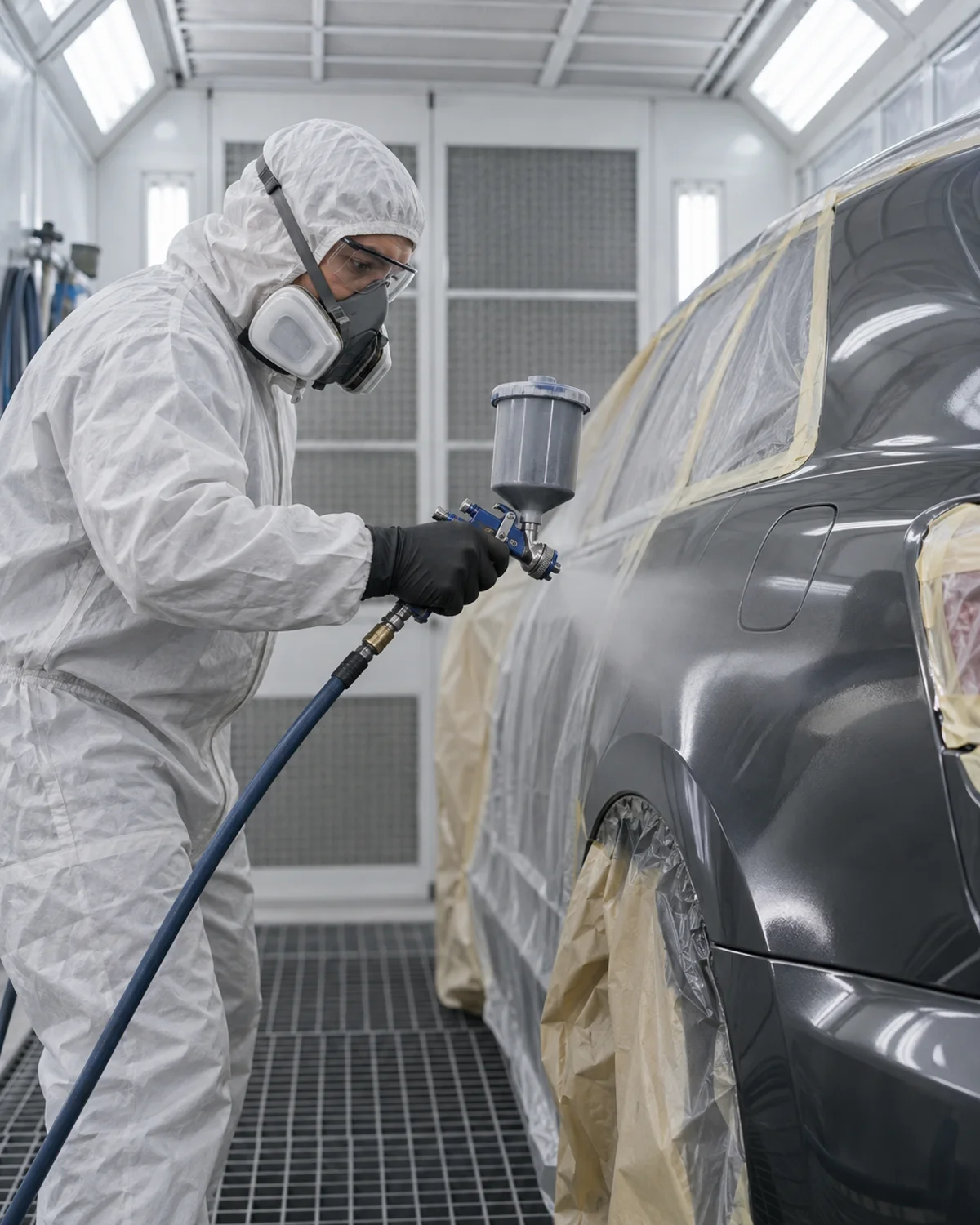
The finish starts underneath
Fresh color cannot hide weak preparation.
Paint is the part you see, but the layers below it determine whether the result stays smooth and consistent. A repaired panel may need shaping, feather-edging, corrosion protection, primer, block sanding, cleaning, and careful masking before color is mixed or a spray gun enters the booth.
We pay attention to panel edges, body lines, repaired substrates, and transitions into the existing finish. If the surface is uneven, contaminated, or not fully prepared, the clear coat will make the problem easier to see. The durable choice is to correct the foundation first.
- Prepare the surface
- Repair edges, sanding marks, primer, cleanliness, and masking are checked before color application.
- Evaluate the color
- The vehicle finish and test samples guide adjustments for tone, value, and metallic or pearl behavior.
- Apply and blend
- Coating technique and blend strategy are chosen around the repair location and surrounding panels.
- Clear and inspect
- Clear coat, curing, finishing, and inspection complete the appearance and protection of the repair.
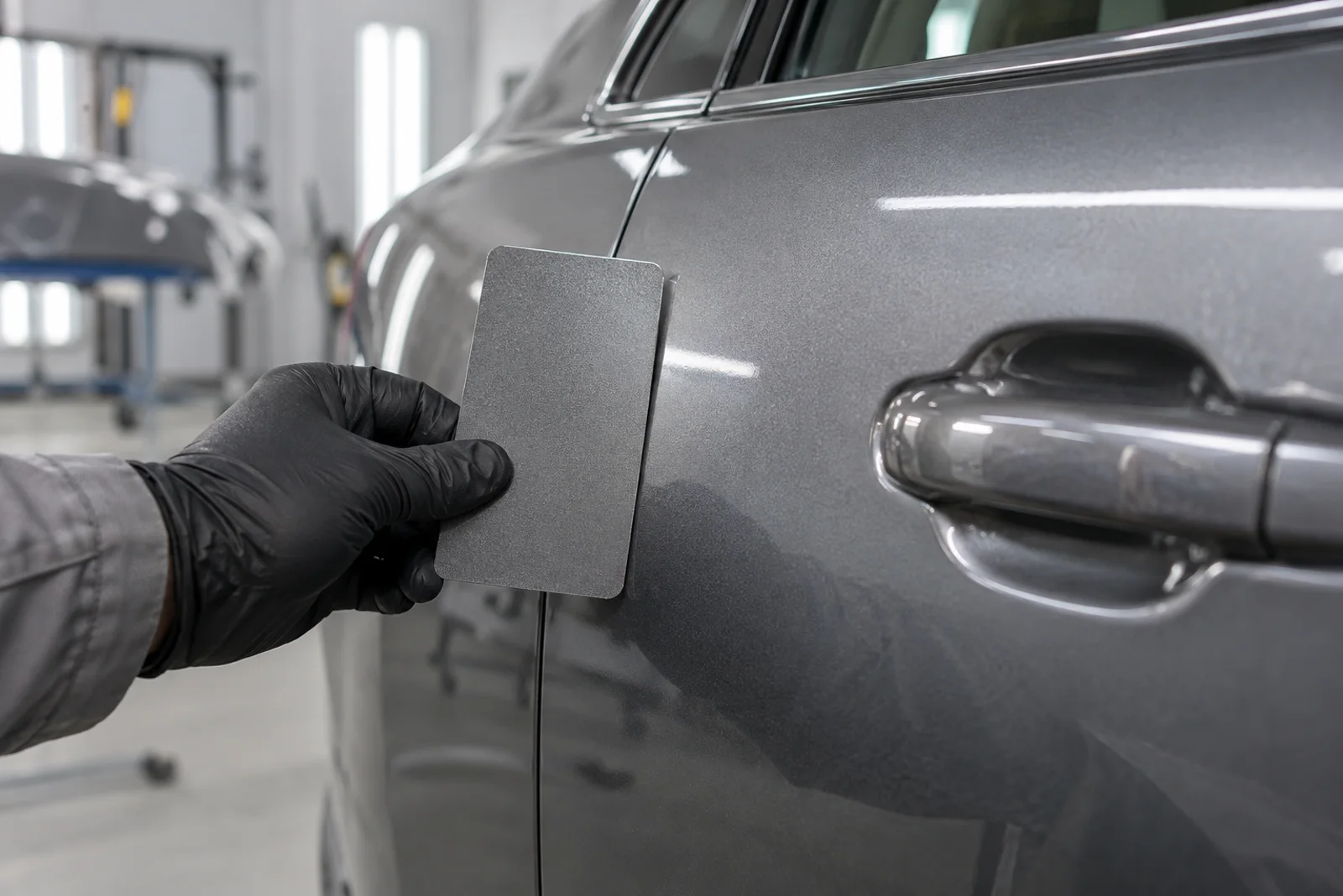
Color is more than a code
The vehicle tells us what the formula alone cannot.
Two vehicles with the same factory color code can look different after years of sun, care, previous repairs, and normal production variation.
- Metallic flake changes with spray angle, air pressure, and application distance.
- Pearl and multi-stage finishes build color through more than one coating layer.
- Curved panels reflect light differently from flat spray-out samples.
- Blending can soften the transition where a direct panel match would remain visible.
When refinishing is appropriate
The visible problem determines only part of the work.
We inspect the damage first because not every paint problem begins or ends at the topcoat.
Explore all services- Collision repairs
- Repaired and replaced panels need a finish plan that accounts for panel location, adjacent color, and reassembly.
- Deep scratches and chips
- Damage through the clear and color layers may require sanding, substrate repair, primer, and refinishing.
- Peeling or failed clear coat
- Failing material must be addressed before a new coating system can form a sound surface.
- Previous repair defects
- Texture, sanding marks, edge mapping, contamination, or color mismatch must be diagnosed before correction.
Before the vehicle leaves
A final look should be deliberate, not a quick glance.
We review the finish as part of the complete repair, not as an isolated patch of color.
- Color transition across the repaired area and adjacent panels
- Surface shape, gloss, texture, and visible refinishing defects
- Panel edges, openings, trim lines, and masking boundaries
- Reinstalled handles, lamps, moldings, and related exterior parts
- Care instructions that apply to the fresh finish
Paint and refinishing questions
What drivers want to know before the work begins.
How do you match new paint to the rest of my car?
We evaluate the vehicle color, existing finish, metallic or pearl behavior, and adjacent panels. The paint code is a starting point, but final matching depends on test samples, adjustment, application, and blending when appropriate.
Can you paint only the damaged panel?
Sometimes. The repair location, color, panel shape, and condition of the surrounding finish determine whether a panel-only refinish will look consistent or whether blending into an adjacent panel is appropriate.
Will refinishing remove deep scratches?
Yes, when the damaged area is properly repaired and prepared first. A scratch that reaches primer, metal, or plastic usually needs more than polishing or touch-up paint.
Can peeling clear coat be painted over?
Not if the failing material remains underneath. Loose or deteriorated finish must be removed or stabilized, and the surface must be prepared correctly before new coating is applied.
Why does paint preparation take so much time?
Preparation controls adhesion, surface shape, cleanliness, and the way the finish lays down. Rushing sanding, masking, primer work, or cleaning can leave defects that become more obvious after the clear coat is applied.
Does faded paint make color matching harder?
It can. Sun exposure and previous repairs can change how the existing finish looks compared with the original formula. That is why the vehicle itself must be evaluated instead of relying only on a paint code.
When can I wash my car after it is refinished?
Care instructions depend on the refinishing materials and curing conditions. We will explain the appropriate washing, waxing, and surface-care guidance when your vehicle is delivered.
Show us the finish problem
Get a clear recommendation before you commit to paint work.
Contact our Garden Grove shop with photos or details about the damaged area. We will help you understand whether the vehicle needs polishing, surface repair, panel refinishing, or a broader collision repair plan.
Contact Us