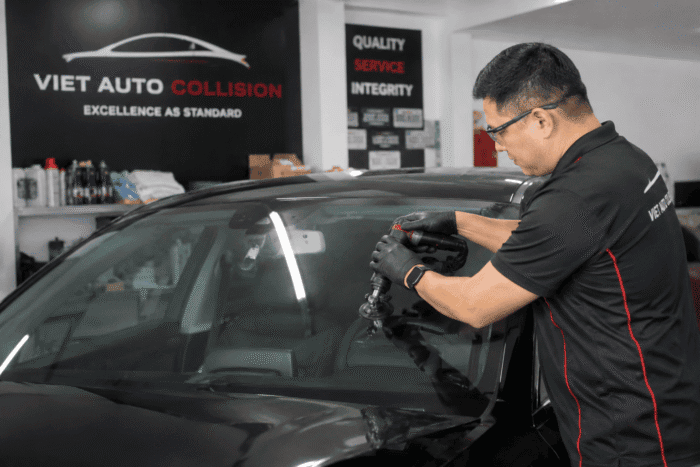
Type “windshield repair near me” into Google from anywhere in Garden Grove and you’ll get a dozen results before you finish the search bar. What that list won’t tell you is which of those shops actually recalibrates your car’s cameras and sensors afterward, whether the glass they’re installing is rated for your vehicle, or if the mobile van pulling into your driveway can even do the job right in a parking lot. The map results solve the “near me” part. They don’t solve the “done correctly” part.
If you’ve got a chip in your windshield right now, here’s what actually separates a shop worth calling from one that’s just first on the list.
Why “Near Me” Results Don’t Tell the Whole Story
Search rankings are built on proximity, reviews, and ad spend, not on whether a shop follows the industry’s own safety standards for glass work. The Auto Glass Safety Council maintains the ANSI/AGRSS windshield repair and replacement standard, which spells out things like minimum cure time for resin, proper urethane bead height, and safe drive-away time. A shop can be five minutes from your house and still skip half of it. There’s no easy way to see that from a search results page, which is why the questions you ask matter more than the ranking.
Mobile Windshield Repair vs. In-Shop Service
Most “near me” searches turn up mobile options first, since a van that comes to your office or driveway is genuinely convenient. But mobile isn’t automatically the right call for every repair.
When Mobile Service Makes Sense
A small chip repair, one that hasn’t spread into a crack and sits away from the edge of the glass, is usually a fine candidate for mobile service. The resin injection process takes about 30 minutes and doesn’t require a controlled environment. If you’re just trying to stop a chip from spreading before it grows into a full crack, having a technician come to your workplace parking lot in Garden Grove saves you a trip and gets ahead of the damage before it’s a replacement job.
When You Should Go to a Shop Instead
Full windshield replacement is a different story. Urethane adhesive needs a clean, temperature-controlled cure, and any car with forward-facing cameras, lane departure warning, or automatic emergency braking needs recalibration equipment that most vans simply don’t carry. Rain, wind, and dust in a driveway setting can also compromise the bond. If the damage is more than a chip, or your car was built after roughly 2018 and has driver assistance features, an in-shop appointment is the safer route.
ADAS Calibration Is the Step Most “Near Me” Listings Skip
This is the part that gets overlooked most often, and it’s the one with actual safety consequences.
What ADAS Calibration Actually Involves
Modern windshields aren’t just glass. On many vehicles, the forward camera that powers lane keeping, adaptive cruise, and automatic braking is mounted directly to the windshield. Move that glass even slightly during replacement and the camera’s aim shifts with it. Recalibration realigns the camera to the manufacturer’s exact specification, either with a static target board set up at a fixed distance in a shop, or dynamically by driving the vehicle under specific conditions, sometimes both, depending on the make.
Why Skipping It Is a Real Safety Risk
The National Highway Traffic Safety Administration’s guidance on driver assistance technologies notes that these systems depend on precise sensor alignment to function as intended. A camera that’s off by even a couple of degrees can misjudge following distance or miss a lane marking entirely, and the driver has no way to know it’s happening until the system fails to react. Ask directly whether a shop performs in-house calibration or subcontracts it out. Either answer can be fine, but “we don’t do that” should be a dealbreaker if your car has these features.
OEM Glass vs. Aftermarket Glass: Does It Matter for a Chip Repair?
For a straightforward chip repair, this question doesn’t apply since you’re keeping your original glass. It matters once replacement is on the table. OEM glass is made to the exact specification of your vehicle’s manufacturer, including the correct thickness, tint, and camera bracket placement. Aftermarket glass is manufactured to meet federal safety standards but can vary slightly in optical clarity and how well the ADAS bracket seats.
For an older vehicle without cameras or sensors, quality aftermarket glass is usually a reasonable, more affordable choice. For a newer vehicle where the windshield doubles as a sensor mount, the closer fit of OEM glass reduces the chance of calibration issues down the line. Our OEM parts guidelines apply the same logic to glass that we use for body panels: match the manufacturer spec whenever the vehicle’s safety systems depend on it.
How California’s Full Glass Coverage Actually Works
One reason “near me” searches spike after a chip appears is that a lot of drivers assume glass repair is free. That’s sometimes true, but not automatically.
What “Zero Deductible” Really Means
California allows insurers to offer a full glass endorsement as an add-on to comprehensive coverage, which waives your deductible specifically for windshield repair or replacement. If you added that endorsement when you set up your policy, a chip repair can genuinely cost you nothing out of pocket. If you didn’t, standard comprehensive coverage still applies, but your regular deductible comes out of the claim.
When You’ll Still Pay Out of Pocket
Check your declarations page or call your agent before assuming either way. A repair shop that’s been through this process with California insurers, ours included, can usually tell within a phone call whether your policy carries the endorsement. Our insurance claims assistance covers the same verification step for larger collision claims, and it works the same way for glass. Related to that, we’ve walked through the broader insurance claim process for collision repairs in more detail if you’re dealing with damage beyond just the windshield.
Questions Worth Asking Before You Book
Before you commit to the first result that pops up, a short phone call can save you a comeback appointment. Worth asking:
- Do you perform ADAS calibration in-house, or is it subcontracted to another shop?
- What brand of resin or glass are you using, and is it OEM or aftermarket?
- What’s your safe drive-away time after installation?
- Do you verify insurance glass coverage before the appointment, or does the customer handle that?
- Is there a warranty on the repair or replacement, and what voids it?
A shop that answers these without hesitation has likely done this hundreds of times. One that seems unsure about calibration or warranty terms is worth a second call elsewhere.
How Long Windshield Repair Actually Takes
A single chip repair typically takes 30 to 45 minutes, resin cure time included. Full replacement runs longer, usually one to two hours for the install itself, plus additional time if calibration is needed. Static calibration can add another hour, and dynamic calibration requires a test drive of a specific length and set of conditions, which can push a same-day appointment into the following morning depending on weather and traffic patterns around Garden Grove.
Safe drive-away time also matters more than people expect. Urethane adhesive needs time to reach a minimum bond strength before the vehicle is safe to drive, particularly in a crash where the windshield contributes to roof structure integrity. Reputable shops won’t hand you the keys early just to hit a turnaround promise.
When a Chip Repair Isn’t Enough
Not every ding qualifies for a quick resin fix. We’ve covered the specific size and location thresholds that determine whether a windshield can actually be repaired instead of replaced in more depth, but as a general rule, replacement becomes the safer option when:
- The crack is longer than about six inches or has multiple branching lines
- Damage sits directly in the driver’s primary line of sight, where resin repair can leave a visible distortion
- The chip is within two inches of the windshield’s edge, where structural strength is more easily compromised
- There’s already been more than one repair attempt on the same crack
California’s vehicle equipment rules require a clear, unobstructed windshield, a standard the California driver handbook’s vehicle equipment section touches on directly. A repair that leaves a hazy spot in your direct sightline technically gets the crack fixed but doesn’t actually solve the problem it created.
If you’re not sure which category your damage falls into, a quick look from a technician settles it faster than guessing from a photo. If you’re weighing your options more broadly, our guide on choosing a body shop you can trust with repeat work covers a lot of the same questions worth asking before any repair, glass or otherwise.