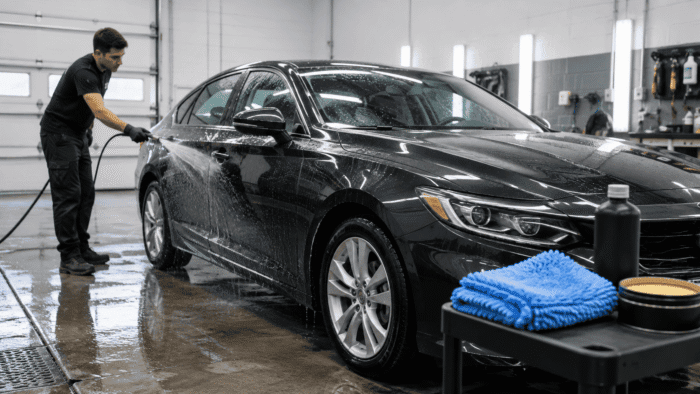
Every car that leaves our paint booth gets the same two sentences at pickup: don’t wash it right away, and don’t wax it for a while. Almost nobody asks us to define “right away” or “a while” before they’re already backing out of the lot, and by the time they do think to ask, they’ve usually already found four different answers online that don’t agree with each other. Seventy-two hours. Two weeks. Thirty days. Ninety days. All of those numbers show up in the first page of search results, and none of them come with an explanation of why they’re different, because they’re usually answering slightly different questions.
We’re not guessing on this one. Paint curing is chemistry, not folklore, and the actual timeline depends on things most customers never get told: whether the panel was baked or air dried, what you’re actually planning to do to it (rinse it, hand wash it, wax it, ceramic coat it), and how the repair was done in the first place, a full color change after structural frame work follows the same clock as a single scuffed bumper. Here’s the real breakdown, not the rounded-off version.
Why There’s No Single Answer
The number one thing that changes the timeline is whether your panel was cured in a heated booth or left to air dry. Most shops that do this kind of paint and refinishing work at any real volume, us included, bake refinished panels, usually around 140 degrees for roughly a half hour once the color and clear are on. That heat speeds up the chemical crosslinking that turns wet paint into a hard, stable finish, a process paint chemists sometimes call curing rather than simply drying. An air dried panel, the kind you get from some mobile touch-up services or a shop without booth capacity, is relying on ambient temperature alone, and that same crosslinking can take days longer to reach the same point.
Here’s the part that trips people up: a baked clear coat is usually hard to the touch within a day or two. Run a thumbnail across it and it feels done. It isn’t. Surface hardness and full cure are two different things. The top layer sets up fast because it’s exposed to the heat and air directly, but solvent trapped underneath is still working its way out for days or weeks after that, depending on the paint system and the thickness of the coats. That gap between “feels dry” and “actually finished curing” is where almost all of the too-soon damage happens.
The Real Timeline, Step by Step
We don’t give customers one number. We give them a timeline that changes based on what they’re actually about to do to the car.
Rinsing and light contact (first 2 to 7 days)
Plain water is the safest thing you can put on fresh paint, but even that should wait a couple of days on a baked panel and closer to a week on an air dried one. Skip soap entirely in this window. Most car wash soap is formulated to strip oils and road film, and on paint that hasn’t finished curing it can pull uncured solvent right along with it, leaving a dull or slightly cloudy patch that wasn’t there at pickup.
Hand washing (roughly 2 weeks out)
By the two week mark on a baked repair, a gentle hand wash with a pH-neutral shampoo and a clean microfiber mitt is generally safe. Skip the automatic tunnel wash for longer than that, the brushes and high-pressure jets in most of those systems are harder on a fresh clear coat than they are on paint that’s had months to fully harden, baked or not.
Wax, sealant, or paint correction (30 days minimum)
This is where most of the online advice gets vague, and it’s the step that actually matters most. Wax and paint sealant both work by sitting on top of the clear coat and sealing it, which is exactly the problem if the coat underneath is still off-gassing solvent. Trap that solvent under a layer of wax and it has nowhere to go. We tell customers 30 days minimum before wax or sealant, and if the repair was done somewhere without booth baking, we push that closer to 45 days. Same logic applies to machine polishing or paint correction, that’s compounding and buffing pressure against a surface that hasn’t fully hardened, and it’s easy to burn through a clear coat that’s softer than it looks.
Ceramic coating (45 to 60 days)
Ceramic coating is the strictest one of all, because unlike wax it’s not coming off in a few months. It’s a semi-permanent bond to the clear coat, and it’s the same reason our detailing team won’t book a ceramic appointment on a repaint that’s still inside its cure window. If you seal that bond over paint that’s still curing, any trapped solvent that eventually works its way out has to push through the coating to do it, and that’s when you see hazing or tiny bubbling under the coating months later, on a car that looked flawless the day it was applied, a failure mode paint manufacturers themselves document as a known risk of coating too early. We won’t schedule a ceramic appointment inside 45 days of a repaint, and honestly we’d rather push it to 60 if the customer isn’t in a hurry.
What Actually Happens If You Rush It
This isn’t hypothetical. We see the results come back in for correction a few times a year, and it’s almost always the same handful of patterns:
- Solvent pop: tiny pinhole-looking blemishes that weren’t there at pickup, caused by trapped solvent trying to escape through a surface that already sealed over. These usually show up days to weeks later, not immediately, which is exactly why people don’t connect them to the wax or wash they did.
- Swirl marks that cut deeper than normal: the same wash mitt or buffing pad that would leave light, polish-able swirls on hardened paint can actually gouge a still-soft clear coat, leaving marks that need real correction work, not just a quick buff.
- Hazing under wax or coating: a cloudy, slightly milky look that develops under the sealed layer over the following weeks, most common with ceramic coating applied too early.
- Uneven gloss between the repaired panel and the rest of the car: if only part of the vehicle was chemically stripped or dulled by an early wash, you end up with a visible mismatch that wasn’t there when the car left the booth.
None of this is permanent damage that requires a full repaint, in most cases it’s correctable with proper buffing once the paint has finished curing, and the trade press covers the same failure patterns we see in our own bay. But it’s extra time and extra cost for something that a 30 day calendar reminder would have prevented.
Special Cases That Change the Timeline
The general numbers above assume a straightforward panel repaint. A few situations change the math:
- Spot or blend repairs (a single bumper cover, a fender, a door): the actual cure timeline on the repaired panel is the same as a full repaint, but people tend to relax the rules because “it’s just one small area.” It isn’t small to the paint chemistry. This only applies when the panel actually got paint, by the way, if the damage was small enough to pull with paintless dent repair instead of traditional bodywork, none of this timeline applies since the factory finish was never disturbed. Treat a bumper repaint exactly like you’d treat a full color change.
- Plastic bumper covers versus steel panels: plastic flexes and expands with temperature differently than metal, and the paint on it can take slightly longer to feel fully settled. If your repair included a bumper cover, don’t assume it’s done just because the metal panels next to it feel hard.
- Cold or humid weather: curing is a chemical reaction, and chemical reactions slow down in the cold. A repair that goes home in December can genuinely need extra days compared to the same repair in July, even with the same booth bake cycle.
- DIY touch-up paint or a spray can repair: this is the slowest cure of all, no bake cycle, no professional clear coat system, and it can realistically take several weeks before it’s stable enough for anything beyond a rinse.
What We Actually Tell Customers Before They Leave
Since a verbal warning at pickup tends to get forgotten by day four, here’s the quick-reference version we’d rather people just save:
- Days 1 to 2: water only, no contact if you can avoid it. Rain is fine.
- Days 3 to 7: gentle rinse only, still no soap or contact wash.
- Around 2 weeks: hand wash with pH-neutral soap and a clean mitt, no automatic wash.
- 30 days minimum: wax, sealant, or paint correction.
- 45 to 60 days: ceramic coating, later if the repair wasn’t booth-baked.
Parking under a car cover in the first couple of weeks is worse than parking uncovered in most cases, the fabric rubbing against paint that hasn’t fully hardened can leave the same kind of marring a rough wash mitt would. If you need protection from sap or bird droppings, a carport or garage beats a cover every time in that first stretch.
Does This Affect Your Warranty?
A workmanship or paint warranty covers defects in the repair itself, things like peeling, fading, or improper adhesion that show up under normal use. It generally isn’t voided by an honest mistake like an early wash, but damage from rushing the cure schedule is a different category of problem than the warranty is meant to catch, and a shop worth its warranty will tell you plainly which one you’re looking at rather than just quoting you a new correction job. If something looks off in that first month, the right move is to bring it back and let the shop that did the work take a look before you touch it again yourself.
Can I drive in the rain right after my car is painted?
Yes, plain rain is one of the lower-risk things that can happen to fresh paint since it’s just water with no soap or wax chemicals in it. The bigger risk is driving through standing water or road spray that carries grit, since anything abrasive hitting a still-soft clear coat can mark it the way a rough wash mitt would.
Is a touchless automatic car wash safer than hand washing new paint?
Not really, and it’s a common misconception. Touchless washes skip the brushes, but they make up for it with higher-pressure chemical detergents that are harder on a curing clear coat than a gentle hand wash with pH-neutral soap. We’d still tell you to wait the full two weeks and hand wash it yourself before you trust any automatic system, touchless or not.
Does the wait time change if it’s just a bumper repaint, not the whole car?
No, and this is the mistake we catch most often. A single bumper cover goes through the same booth cure cycle as a full repaint, so it needs the same 30-day minimum before wax and the same care in the first two weeks, even though it feels like a small enough job to not worry about.
My insurance paid for the paint job. Does the warranty depend on how I care for it early on?
A legitimate workmanship warranty covers defects in how the repair was done, not damage caused afterward by washing or waxing too soon. That said, if you’re not sure whether what you’re seeing is a defect or cure damage, bring it back before you attempt to buff or correct it yourself, since that can make it harder to tell which one it actually was.
I already waxed it too soon. What should I do now?
Stop applying anything else and don’t try to buff it out yourself. Most early-wax damage, hazing or light solvent pop, is correctable once the paint finishes curing, but it usually needs a proper machine polish from someone who can tell trapped solvent haze apart from a surface-level issue, not another coat of product on top.