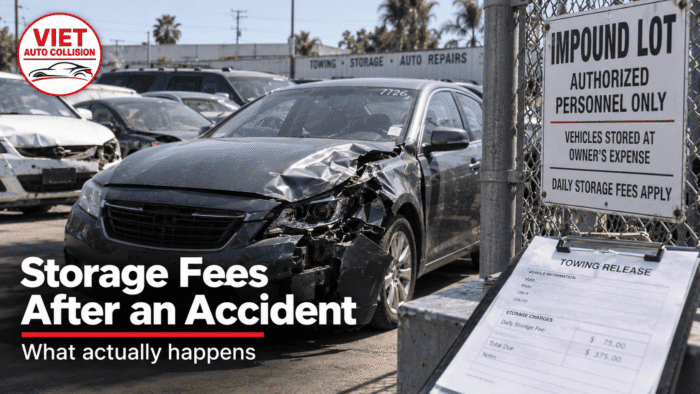
Somebody calls us almost every week standing in a tow yard parking lot asking what they’re supposed to do next. Nobody explained any of this at the scene. The officer called a tow truck, the truck hooked up the car, and now it’s sitting behind a chain link fence racking up a bill nobody mentioned would exist.
Here’s the part that catches most people off guard: that bill starts the moment the truck drops the car off, not when a claim gets approved, not when someone finally calls their insurance company back. A car that sits at a yard for two weeks before anyone moves it isn’t looking at a couple hundred dollars anymore. It’s looking at a bill that can run well past a thousand, and somebody has to answer for it.
Why the Meter Starts Running the Second the Tow Truck Leaves
After a crash, an officer on scene has the authority to order a vehicle removed from the roadway if it can’t be driven safely, whether or not the owner agrees to it. That’s a non-consensual tow, and it almost never goes to a shop of the owner’s choosing. It goes to whichever yard is next on the rotation list, or whichever private tow company responded, and that yard is a for-profit storage business, not a repair facility.
Once the car is on their lot, the daily storage clock starts. Depending on the yard and the size of the vehicle, we’ve seen daily rates run anywhere from around $20 a day at the low end to $75 or more, and that’s before after-hours release fees, gate fees, or a separate charge if the vehicle is oversized. None of that gets explained up front. It just shows up on the invoice when someone finally goes to retrieve the car.
We can usually tell how long a car sat at a yard before it reaches our shop without being told. The battery is dead almost every time. If a window got broken in the crash, there’s often a musty smell from rain getting into the cabin, and we’ll find fresh scuffs or scrapes that weren’t in the original accident photos from being shuffled around a packed lot. None of that is anyone’s fault exactly, it’s just what happens when a car sits outdoors for two or three weeks with nobody checking on it.
You’re Not Stuck With Whatever Yard the Tow Truck Picked
You Have the Right to Move It
Under California Insurance Code Section 758.5, an insurer can’t require you to have your vehicle repaired at a specific shop or force you to use a particular storage facility. That right gets lost on a lot of people because nobody at the scene mentions it, and the tow yard certainly isn’t going to bring it up either. We pick cars up directly from impound lots for customers on a regular basis, and most of the time the car could have moved days earlier if the owner had known to ask.
What It Actually Takes to Get It Released
The process is more paperwork than people expect, but it’s rarely complicated once you know what the yard wants:
- Call the yard directly and ask what they require for release, not just what they’ll tell the tow company
- Have your registration and a photo ID ready, and if it was a police-ordered tow, the report number helps move things faster
- If your insurer already opened a claim, get the claim number before you call, some yards want it on file before they’ll release the vehicle to a third party
- Arrange transport to a shop, either through your own tow company or by asking the receiving shop’s towing service to handle the pickup, which is common and usually faster
One detail that trips people up: some yards require the registered owner to personally authorize release, even when a shop’s driver is doing the actual pickup. If the owner isn’t reachable that day, the car sits for another one, so it’s worth getting that authorization on file as early as possible rather than waiting until the truck is already on its way.
Who Actually Ends Up Paying the Bill
This depends on fault and coverage, and the honest answer is that it’s rarely as clean as people want it to be. If the other driver was at fault, their insurance is generally responsible for reasonable towing and storage costs, but “reasonable” is doing real work in that sentence, an insurer can and does push back on fees they consider excessive or on storage time they consider unnecessary. If you carry comprehensive or collision coverage, your own policy typically covers towing and a limited amount of storage regardless of fault, though usually with a per-day or total dollar cap.
What almost nobody mentions is that you have an independent duty to limit your own losses once you know about them. Waiting on a claim decision before moving the car isn’t a neutral choice, both your policy and general insurance law expect you to act to keep the damage from growing. We tell every customer the same thing: don’t wait for the claim to get approved before moving the car. Every extra day it sits is a day an adjuster can point to later and ask why nobody did anything about it. This exact question, who’s on the hook and how fast they have to move, comes up constantly in our insurance claims assistance work, and it’s one of the more common things an adjuster will push back on once a vehicle has sat somewhere too long.
If the accident is still tying up a rental car at the same time, the two issues run on separate clocks and neither one waits for the other. We’ve written about what happens when rental coverage runs out before the repair is finished, and the same logic applies here: nobody’s clock pauses just because paperwork is moving slowly on the other end.
What Happens If Nobody Moves It
If a car sits long enough, the yard doesn’t just keep billing quietly forever. California law lets a storage facility place a lien on a vehicle for unpaid charges, and if the vehicle is worth $4,000 or less, the yard can start the lien sale process within 15 days of the lien arising. The maximum storage lien period for a law enforcement-ordered tow is 60 days, extendable to 120 if a lien sale application gets filed in time, per the California DMV’s storage lien limitation rules. Before any sale, the owner and legal owner are supposed to receive formal notice, generally 20 days ahead of the sale date, under the process laid out in California Civil Code Section 3068.1.
In practice, this means a car that gets forgotten during a slow claim can genuinely get sold out from under its owner before the insurance side ever finishes sorting out fault. We’ve seen it happen to drivers who assumed “the insurance company is handling it” meant somebody was actively tracking the storage clock. Nobody was. A few things worth keeping in mind:
- Storage fees accrue whether or not anyone is actively working the claim
- Notice of a pending lien sale is mailed to the registered and legal owner, so an old address on file with the DMV can mean you never see it coming
- Once a lien sale notice goes out, the timeline to respond is measured in days, not weeks
There’s a separate wrinkle if the vehicle in question is an EV. An EV with damaged battery cells has to be flatbedded, never towed on a hook, and yards treat that battery as a fire risk the entire time it sits on their lot, which is part of why EV storage sometimes carries its own higher daily rate. We covered more of what makes EV collision repair different from a standard gas vehicle if that applies to your situation.
And if the damage looks bad enough by the time the car finally reaches a shop, storage fees stop being the only number that matters. At that point the real question becomes whether it’s worth repairing at all, which is a completely separate calculation from anything happening at the tow yard. We walked through how that total loss decision actually gets made in a separate post, and it’s worth reading before you assume a high storage bill means the car isn’t worth saving.
The One Call That Actually Saves You Money
If there’s a single piece of advice worth taking from all of this, it’s to stop treating the tow yard as a waiting room. The moment you know your car is sitting somewhere racking up daily charges, that’s the moment to start moving it, not after the claim gets assigned an adjuster or after the other driver’s insurance calls you back. Most of the storage bills we see that genuinely surprised the owner weren’t caused by a slow insurance company, they were caused by nobody making that first call for a week or two while everyone assumed somebody else was handling it.
Can I refuse to have my car taken to a specific tow yard after an accident?
Once a truck has already hooked up the vehicle at the scene, no, that decision has usually already been made for you. But you can request your own tow company before one arrives, and you always have the right to have the car moved from that yard to a shop of your choosing once it’s off the road.
How fast does insurance usually move a car out of a tow yard?
There’s no guaranteed timeline, and it’s often slower than people expect, sometimes a week or more if fault hasn’t been determined yet. That’s exactly why we recommend not waiting on the insurer to initiate the move. You’re allowed to arrange it yourself and sort out reimbursement afterward.
Do I have to pay the tow yard out of pocket before I get reimbursed?
Often yes, most yards want payment before they’ll release a vehicle, then you submit that receipt to whichever insurance company is responsible for reimbursement. Keep the itemized invoice, not just a total, since adjusters frequently ask for a breakdown of tow versus daily storage versus any extra fees.
Does it matter whose fault the accident was for who pays storage?
It affects who’s ultimately responsible, but not how fast the fees pile up. If fault is disputed or still under investigation, storage charges keep accruing at the yard regardless, which is another reason to move the car early rather than waiting for fault to get sorted out first.
What happens if I genuinely can’t afford to get my car out right away?
Call the yard and ask for a written breakdown of charges to date, and call your insurer immediately to get a claim number on file, since some yards will hold off on escalating to a lien sale once they see an active claim attached. Waiting silently is the one option that reliably makes it worse.